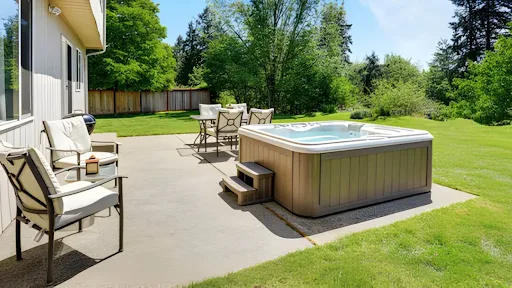
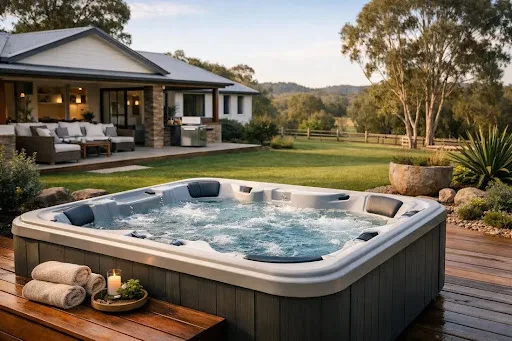
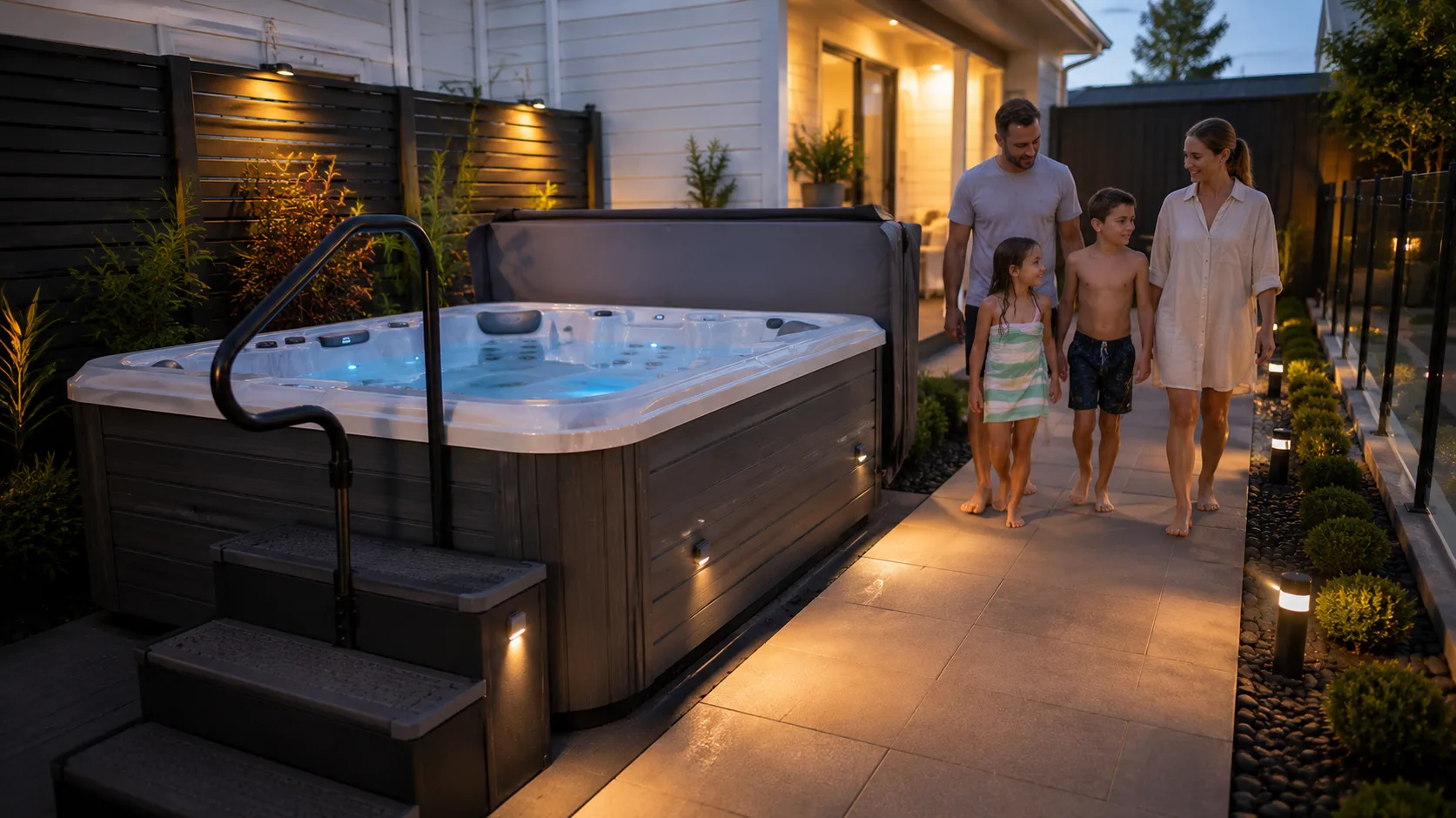
A spa should be a place where you can switch off, relax and enjoy your backyard. But if pumps, blowers or vibrating equipment create excessive mechanical noise, the experience can quickly become less relaxing. This is particularly important in residential areas, where homes may be close together and outdoor spaces are often used in the evening.
For Newcastle homeowners, choosing a quiet spa is therefore about more than comfort. It can influence how often you use your spa, how peaceful your backyard feels and how much operational noise reaches surrounding areas.
Understanding where spa noise comes from and which design features can help reduce it makes it easier to compare models before making an investment.
Where Does Spa Noise Actually Come From?
Spa noise does not come from one component alone. Several pieces of equipment can contribute to the overall sound level, and the way those components are installed can make a significant difference.
Circulation Pumps
Circulation pumps operate to move water through the filtration and heating system. Depending on their design and operating speed, they can create a continuous mechanical hum.
Modern circulation systems can be designed for quieter, more efficient operation, but buyers should still ask how the pump operates and where it is positioned.
Jet Pumps Under High Load
Jet pumps can be significantly louder when operating at higher speeds because they move large volumes of water to create powerful hydrotherapy.
This does not mean powerful jets must always equal excessive noise. Pump technology, insulation and cabinet design can all influence how much sound escapes from the equipment area.
Blowers and Air Systems
Some spa systems use air blowers to create additional bubbling or aeration. These systems can produce a noticeable rushing or mechanical sound while operating.
If a peaceful environment is a priority, ask whether a model uses an air blower and how it has been integrated into the equipment system.
Heaters and Heat Pumps
Heating equipment can also contribute to operational noise. Traditional heating components may produce some mechanical or electrical sounds, while external heat pumps have fans and compressors that can be audible during operation.
If you’re considering a spa with a heat pump, ask about its operating noise separately from the spa itself.
Vibrations Through Cabinets and Foundations
Sometimes the problem isn’t simply the sound produced by the pump. Vibration can travel through the cabinet, frame or supporting surface.
A poorly prepared or uneven foundation can amplify vibration, making equipment seem louder than it would be on a properly constructed base.
This is why two apparently similar spas can produce very different noise experiences once installed.
The Difference Between a Quiet Spa and a Noisy Spa System
Two spas can have similar jet counts, seating capacity and features but still sound completely different.
The difference often comes down to engineering rather than the number of features advertised.
Cabinet Insulation
Insulation inside the cabinet can help contain equipment noise while also improving thermal efficiency.
A well-insulated cabinet can create a barrier between the pumps and the surrounding environment, helping reduce the amount of mechanical sound that escapes.
Pump Technology
Pump design has a major influence on operational noise.
A system engineered for efficient water movement may operate differently from an older or less refined pump design. Ask the dealer whether the pumps are designed for low-noise operation and whether different speeds are available.
Variable-Speed vs Single-Speed Systems
Variable-speed technology can allow equipment to operate at lower speeds when full power is not required.
Lower operating speeds can potentially reduce both energy consumption and mechanical noise during certain operating periods, although the actual result depends on the specific pump and spa design.
Equipment Placement Design
Where pumps and other components are positioned inside the spa can affect how much sound reaches the outside.
Equipment that is isolated, properly mounted and surrounded by appropriate insulation can produce a noticeably different experience from equipment that transmits vibration directly into the cabinet.
Build Quality and Engineering
Ultimately, a quieter spa comes from the combination of components rather than one particular feature.
Cabinet construction, pump mounts, insulation, plumbing design and equipment positioning can all influence the final result.
When comparing a quiet hot tub, don’t judge sound performance by looking only at the jet count or overall appearance.
How Noise Affects the Relaxation Experience
Sound is an important part of how we experience an environment.
Research into environmental noise has found that unwanted noise can affect wellbeing, sleep and quality of life. The World Health Organization identifies environmental noise as an important public-health concern and provides evidence-based guidance on reducing exposure to harmful environmental noise. Source: World Health Organization – Environmental Noise Guidelines for the European Region (who.int)
While normal spa equipment noise is not automatically a health concern, the principle is relevant: unwanted background noise can influence how people experience their surroundings.
The Psychology of Sound and Relaxation
A peaceful backyard can feel very different from one filled with constant mechanical noise.
When you’re trying to relax, sudden or persistent sounds can draw your attention away from the experience.
Why Constant Mechanical Noise Reduces Enjoyment
Imagine sitting in warm water after a long day only to hear a loud pump running continuously beside you.
Even if the spa itself performs perfectly, the sound can become part of what you associate with using it.
Creating a Spa Environment That Feels Like a Retreat
A relaxing outdoor space is about more than the spa itself.
Lighting, landscaping, privacy, comfortable seating and background sound all contribute to the atmosphere.
Choosing equipment designed for quieter operation can help the spa become a more peaceful feature of the backyard.
The Link Between Quiet Surroundings and Stress Reduction
Quiet environments can help reduce exposure to unwanted environmental noise, which is one reason noise management is considered when designing healthier residential environments.
For homeowners, this means thinking about the complete environment around a spa rather than treating the equipment as an isolated purchase.
Features That Contribute to a Quieter Spa System
If quiet operation is important to you, there are several features worth asking about before purchasing.
Full-Foam Insulation
Full-foam insulation can surround plumbing and equipment while also helping retain heat.
It may help reduce vibration and sound transmission, depending on the design and construction of the spa.
Anti-Vibration Pump Mounts
Pump mounts designed to minimise vibration can help prevent mechanical movement from transferring into the cabinet and foundation.
Ask whether the pumps are mounted using vibration-isolating materials.
Energy-Efficient Circulation Pumps
Modern circulation pumps can operate at lower speeds for filtration and water circulation.
This can help reduce the amount of time high-powered pumps need to operate, potentially contributing to a quieter overall experience.
Acoustic Cabinet Design
Cabinet construction can influence how much sound escapes from the equipment compartment.
A well-designed cabinet can provide an additional barrier between mechanical components and the outdoor environment.
Smart Filtration Cycles
Some modern spas can automate filtration and circulation schedules.
Ask when the filtration system operates and whether settings can be adjusted to suit your household’s preferred usage times.
This can be particularly useful if you want to avoid unnecessary equipment operation while you’re relaxing outdoors.
Modern Heat Pump Technology
Heat pumps can be an energy-efficient heating option, but remember that they have their own fans and compressors.
If you’re considering a heat pump, ask specifically about its operating noise rather than assuming it will be silent.
Practical tip: Before buying, ask the dealer to operate the spa’s pumps, filtration and heating equipment while you stand nearby. If possible, listen to the spa at both low and high operating speeds. This gives you a much better understanding of what you’ll actually hear at home.
If you’re comparing spa options in Newcastle, you can explore the range available from Spas Newcastle and discuss which features may be suitable for your backyard and lifestyle.
Conclusion
A spa should add tranquillity to your backyard rather than become a source of unwanted mechanical noise.
For residential homeowners, quiet operation can influence comfort, relaxation and how suitable the spa feels for evening use. It can also help create a more considerate outdoor environment when neighbouring homes are nearby.
When comparing spas, look beyond seating capacity, jets and entertainment features. Consider pump technology, insulation, equipment placement, vibration control and installation quality as well.
A quieter system may provide a much better ownership experience, particularly if you plan to use your spa regularly for relaxation.
Ready to Find a Quieter Spa for Your Home?
If you’re looking for a spa that combines comfort, performance and a relaxing backyard experience, explore the range available from Spas Newcastle.
Website: https://spasnewcastle.com.au/
Email: sales@spasnewcastle.com.au
Phone: (02) 4942 3212
Speak with the Spas Newcastle team about your requirements and compare spa options designed for comfortable residential use.
FAQs
How Quiet Should a Modern Spa Be?
There is no single noise level that applies to every spa. Pump speed, filtration, heating equipment, cabinet construction, insulation and installation can all affect the sound produced. Instead of relying on a generic decibel claim, listen to the actual model operating at different speeds before purchasing.
What Causes Most Spa Noise?
The main sources include circulation pumps, high-powered jet pumps, air blowers, heating equipment and vibration. Noise can also increase when vibration transfers through the cabinet or foundation. Equipment placement and the quality of the spa’s construction can therefore make a significant difference to the final sound level.
Can a Quiet Spa Still Have Powerful Jets?
Yes. Powerful hydrotherapy and quiet operation are not necessarily contradictory. Modern spa systems can use efficient pumps, insulation, cabinet construction and vibration management to reduce unnecessary noise. However, high-speed jet operation will naturally produce more sound than low-speed circulation.
Does Installation Affect Spa Noise Levels?
Absolutely. The foundation, positioning and surrounding environment can influence how noise and vibration are experienced. A stable, level base can help minimise unwanted vibration. Placing the spa away from bedroom windows or property boundaries may also help reduce the impact of operational noise.
Is a Quiet Hot Tub Better for Residential Areas?
Generally, quieter equipment is preferable in residential settings, particularly when spas are used during the evening. A quiet hot tub can make the backyard more comfortable while helping minimise unnecessary mechanical noise around nearby homes. Always consider local noise requirements and your neighbours when planning spa use.