Getting a good night’s sleep can be difficult when work, family responsibilities, screens and everyday stress continue well into the evening. In Australia, sleep problems are common: the Australian Institute of Health and Welfare (AIHW) reports that 48% of Australian adults experience at least two sleep-related problems. Source: Australian Institute of Health and Welfare – Sleep Problems as a Risk Factor for Chronic Conditions
For Newcastle homeowners looking for a relaxing way to finish the day, a spa can become part of a consistent evening routine. But can spa relaxation genuinely contribute to better sleep quality?
Research into warm-water bathing suggests that warming the body before bed may help people fall asleep more quickly and improve aspects of sleep quality. A 2019 systematic review and meta-analysis found that warm-water bathing or showering around 1–2 hours before bedtime was associated with improved sleep efficiency, better self-rated sleep quality and shorter sleep onset time. Source: Sleep Medicine Reviews – Before-bedtime passive body heating by warm shower or bath to improve sleep
A spa is not a treatment for insomnia, but incorporating warm-water relaxation into a healthy bedtime routine may help create the right conditions for winding down.
5 Ways a Spa May Support Better Sleep
A spa can offer more than a place to relax at the end of the day. For some Newcastle homeowners, it can become a practical way to create a transition between a busy day and bedtime.
It Helps Quiet a Busy Mind
Going directly from work, household responsibilities or scrolling on your phone to bed does not always give your mind much opportunity to slow down.
Spending time in warm water provides a deliberate pause. Instead of continuing to work or consume information, you can sit comfortably, breathe slowly and allow yourself time to transition into a quieter part of the evening.
This doesn’t mean a spa will eliminate stress, but creating a regular period of calm may make it easier to shift from an active mindset towards rest.
It Relieves Muscle Tension Built Up During the Day
Standing, sitting at a desk, exercising, commuting and household activities can all leave your muscles feeling tense by the evening.
Warm water can feel soothing on tired muscles and may encourage physical relaxation. When your body feels more comfortable, it can also become easier to focus on relaxing mentally.
This is one reason spa relaxation can fit naturally into an evening wellness routine rather than being viewed solely as a way to improve sleep.
It Creates a Consistent Bedtime Routine
Consistency is an important part of developing healthy sleep habits.
Using your spa at a similar time each evening can create a predictable transition towards bedtime. For example, you might finish dinner, reduce screen use, spend some time in the spa, shower and then move into your normal bedtime routine.
The spa itself is not necessarily what creates better sleep. Instead, it can become one part of a repeated sequence that signals the end of the day.
It Reduces Stress Before Bed
Stress and sleep can influence each other. When your mind is still focused on unfinished tasks, tomorrow’s responsibilities or problems from the day, switching off at bedtime can be difficult.
Warm-water immersion provides an opportunity to step away from those distractions.
Research into passive body heating suggests that warm bathing before bed can influence body temperature regulation in a way that may support sleep onset. Source: PubMed – Before-bedtime passive body heating by warm shower or bath to improve sleep.
It Encourages a Screen-Free Wind Down
A spa can also provide a simple alternative to spending the final part of your evening looking at a phone, tablet or television.
Leaving your devices inside and spending some quiet time outdoors can make your evening feel less stimulating.
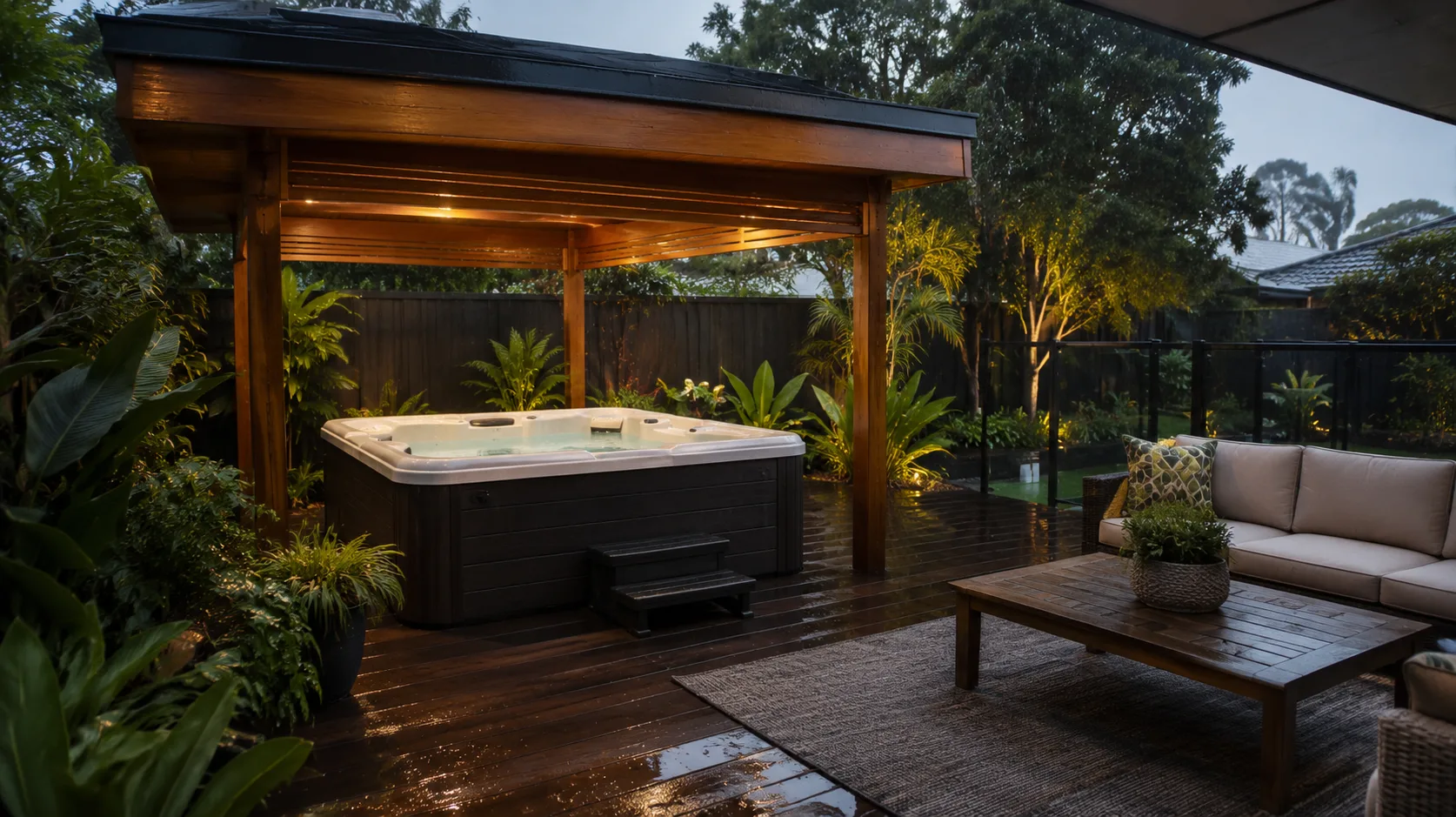
For Newcastle families, this can be particularly appealing when the weather allows you to use an outdoor spa as part of a relaxing nighttime routine.
What Newcastle Homeowners Commonly Experience After Evening Spa Use
Not everyone will experience the same results from using a spa before bed. Sleep is influenced by many factors, including stress, lifestyle, environment and existing sleep habits.
However, there are several experiences that may make evening spa use appealing to Newcastle homeowners.
Easier Sleep Onset
Some people find that they feel ready for bed more quickly after spending time in warm water.
Research provides some support for this experience. A systematic review of warm-water bathing found that bathing at approximately 40–42.5°C around 1–2 hours before bedtime was associated with a reduction in the time needed to fall asleep. Source: PubMed – Warm Shower or Bath and Sleep Meta-Analysis.
Feeling More Relaxed at Bedtime
A warm spa can create a physical sense of comfort that makes the transition to bedtime feel more enjoyable.
Rather than rushing from one activity to another, you have a dedicated period to slow down.
Reduced Evening Stress Levels
For some homeowners, the biggest benefit may simply be having somewhere to disconnect.
A quiet spa session can provide time away from work emails, household tasks and other distractions.
Better Recovery After Physical Activity
If you exercise, work physically or spend long periods on your feet, warm water may feel particularly relaxing at the end of the day.
This doesn’t mean a spa replaces appropriate recovery, exercise programming or professional healthcare. It can simply become another relaxing part of your evening routine.
Improved Evening Routine Consistency
Perhaps the most practical benefit is consistency.
If you enjoy using your spa, you may be more likely to create a regular evening routine around it. That routine can include reducing screen time, relaxing, preparing for bed and maintaining a consistent sleep schedule.
Can a Spa Help if Stress Is Affecting Your Sleep?
Stress is one reason people can struggle to switch off at night. When your mind remains active, simply getting into bed does not necessarily mean you immediately feel ready to sleep.
This is where a warm spa may have a role.
The combination of warm water, reduced distractions and quiet time can help separate the end of your working day from the beginning of your bedtime routine.
There is also evidence that the timing of warm-water exposure may matter. A systematic review found that warm bathing approximately 1–2 hours before bedtime was associated with shorter sleep onset and improvements in sleep efficiency. Source: PubMed – Before-bedtime passive body heating by warm shower or bath to improve sleep
Your spa isn’t treating insomnia—but it may help create conditions that support better sleep.
If persistent sleep difficulties are affecting your daily life, it is important to speak with an appropriate healthcare professional rather than relying on spa use alone.
Is a Spa Worth It for Families Focused on Wellness?
Sleep is only one potential reason to consider a spa.
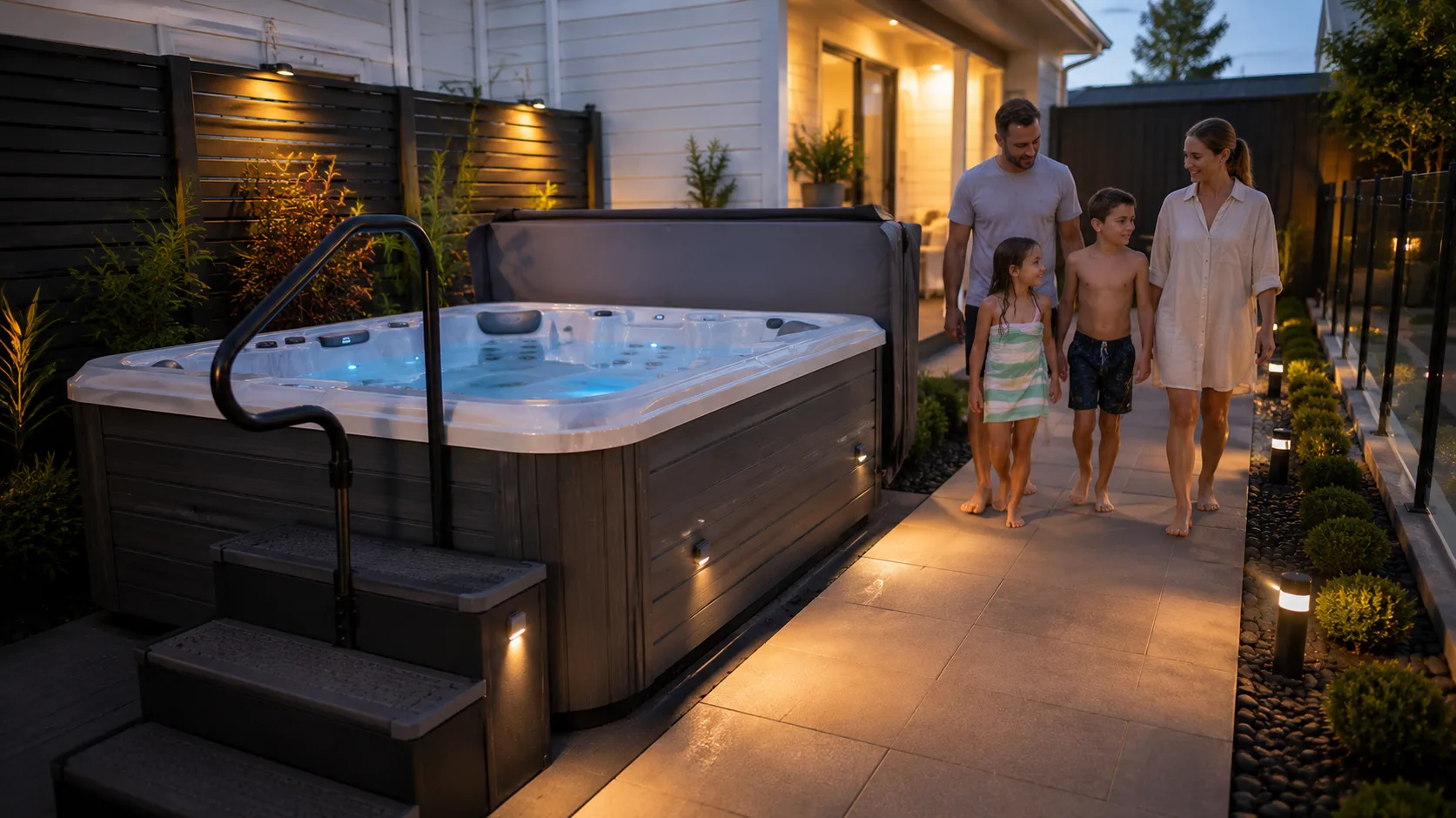
For many Newcastle families, a spa can become part of a broader wellness lifestyle that includes relaxation, social time and recovery after busy days.
Instead of thinking about a spa purely as a sleep solution, consider how often your household would actually use it.
Could you use it for quiet evening relaxation? Could family members use it after exercise? Could it become a place to spend time together without screens?
These questions may be more useful when deciding whether a spa is worth the investment.
If you’re considering different options for your Newcastle home, you can explore the Spas Newcastle spa range and compare the options available for relaxation and everyday wellness.
Conclusion
Better sleep usually comes from a combination of healthy habits rather than one single solution.
A spa can nevertheless become a valuable part of an evening routine. Warm-water relaxation may help you transition away from the day’s stresses, while the timing of bathing before bed may support the body’s natural preparation for sleep.
Research into warm-water bathing provides encouraging evidence, although more research is still needed to understand exactly how different temperatures, durations and routines affect sleep.
For Newcastle homeowners, the biggest benefit may simply be creating a consistent opportunity to slow down, relax and prepare for bedtime.
Ready to Make Relaxation Part of Your Routine?
If you’re considering a spa for relaxation, recovery and a more enjoyable evening routine, explore the range available from Spas Newcastle.
Website: Spas Newcastle
Email: sales@spasnewcastle.com.au
Phone: (02) 4942 3212
FAQs
Can a Spa Really Help Improve Sleep Quality?
Warm-water bathing before bed has been associated with shorter sleep onset and improved sleep efficiency in research. A 2019 systematic review found that warm bathing around 1–2 hours before bedtime may support sleep quality. However, a spa should be considered part of a healthy sleep routine rather than a treatment for sleep disorders.
What Is the Best Time to Use a Spa Before Bed?
Research suggests that using warm water approximately 1–2 hours before bedtime may be beneficial for sleep onset. The timing gives your body an opportunity to cool down afterwards, which may support the natural temperature changes associated with preparing for sleep.
How Long Should I Stay in a Spa for Relaxation?
There is no single ideal duration for everyone. Comfort, water temperature and individual circumstances matter. Research into warm-water bathing has found sleep-related effects with exposures as short as around 10 minutes, but spa users should follow the manufacturer’s safety recommendations and avoid excessively long or hot sessions.
Does Hot Tub Relaxation Help Reduce Stress?
Hot tub relaxation may provide a calming break from work, screens and daily responsibilities. Warm water can also help people feel physically relaxed. However, stress responses vary between individuals, so a spa should be viewed as a relaxation tool rather than a guaranteed treatment for stress.
Can a Spa Replace Other Sleep-Improvement Strategies?
No. A spa works best as part of a broader sleep routine. Maintaining consistent sleep and wake times, creating a relaxing bedtime environment and reducing stimulating activities before bed can all contribute to better sleep habits. The AIHW notes that sleep problems are common among Australian adults, highlighting the importance of taking sleep quality seriously. Source: Australian Institute of Health and Welfare.